When I decided to do my essay on 'Rango', it prompted me to finally buy 'The Ballad of Rango'; I adore 'art of' books and this was one I had my eye on for a long time so to have a valid excuse to get it made me very happy!
I learnt a lot from this book in terms of research for my essay; I found it very interesting how small the team was in the beginning of the project, and that they came from a wide range of areas within the film industry.
I also learnt a lot about how Rango's design was constructed, for example Rango's tail is an extension of his personality and shows his emotions, when he is depressed his tail unravels from a coil to drag behind him. Another interesting fact is that all of his teeth were individually controlled for animation.
Here, I posted a lot of the design notes I wrote after analysing the DVD myself and reading this book:
During the early stages of my research, I looked to things such as the bonus features and promotional material from 'Rango' to get some insight into how the film was designed and made. Much like the film itself, the production of 'Rango' was truly unique and innovative, so I wanted to share these behind the scenes videos of the cast shooting for the film with the never before used technique of 'Emotion Capture'.
Whilst I was studying for the group presentation I learnt about a lot of techniques used to capture performances for animated characters and how they are evolving, as well as the disadvantages with each of them.
This research furthered my belief that the 'Emotion Capture' technique used for 'Rango' is the perfect way for animation to evolve.
One of the biggest fears for actors and animators is the 'Performance/ Motion Capture' technique, the actors fear that once their performance has been captured they no longer have a say in what happens to it and it will be free for the filmmakers to manipulate it in any way they wish; animators fear that they will be put out of a job because of this technology.
With the 'Emotion Capture' technique, the actors play their parts in a mostly natural way, using costumes and each other to help them get into their character, and act out their scenes with cameras and the director with them as with any normal set. Then the animators use the footage for deep reference whilst they create the animations from scratch.
This technique allows all parties to make the most of their talents and work as a team to create what I feel is some of the best animation to date.
Whilst researching for my essay, I came across this review and found it quite an irritating read. This is one of the few bad reviews of Rango that were published, and upon reading it I couldn't help but feel like this reviewer wanted a generic kids movie.
I appreciate that everyone is entitled to their own opinions, but I take issue with a few things that were said:
As a family-demographic product"Rango"has a million selling points, among them an unusually strong voice cast headed byJohnny Deppin tremulous-aesthete mode; a popular live-action director making his featureanimationdebut; and a twist on a genre temporarily back in vogue, thanks to"True Grit."
So, at what point is a child going to announce their desire to see a film from things like a director or an actor, or a trend in cinema? Rango is a Western (remember playing cowboys and indians in your youth?) and the cast are anthropomorphic animals- that is the selling point for a child. I also suspect that the average movie goer won't care about the strength of the acting cast or the debut animation from a director, they will judge the trailer or word of mouth.
"When computer-generated animation sticks this closely to photorealistic landscapes and gunplay and menace, even with a cast of animated lizards and prairie dogs and birds does the result feel like something for kids?"
The whole review gave me the impression that this reviewer simply cannot get past the notion that not all animation is for children and so he attacked the film for its particular brand of humour and style. Rango was never intended to be strictly for children, it was created to be an animated Western above all else.
Regardless of that fact, I think that children are majorly underrated in their intelligence and appreciation for film and I wish that films would stop dumbing down their material to reach the ever younger audience.
During my research I have flicked through quite a few books on Westerns, the two I chose to study a little more in depth are:
This book is a compilation of articles written about (strictly) Hollywood made Westerns dating from the 1940s onwards, looking particularly at the A movies of the genre. I found it interesting to read from a variety of authors who were able to offer a number of different views on the same themes, and the articles included in this book discuss quite unique issues that actually contribute to the genre a great deal. For example one article discusses the body of John Wayne, he has many images in the public eye- John Wayne the legend, John Wayne as the character, and John Wayne the man; the article studies how these contrasting personas are limited by this one body that they all have to share.
And
This book interested me because it focused more on the actuality of Western life and culture and how it had been manipulated for use in Western films. I particularly liked the encyclopaedia layout of facts as it meant I could easily look up a film or director and find the relevant information about them.
In regards to my essay, I have found the former book 'The Movie Book of Westerns' to be quite useful as it discussed the personalities of some of the most iconic Western characters which is useful for my study on the classic Western hero.
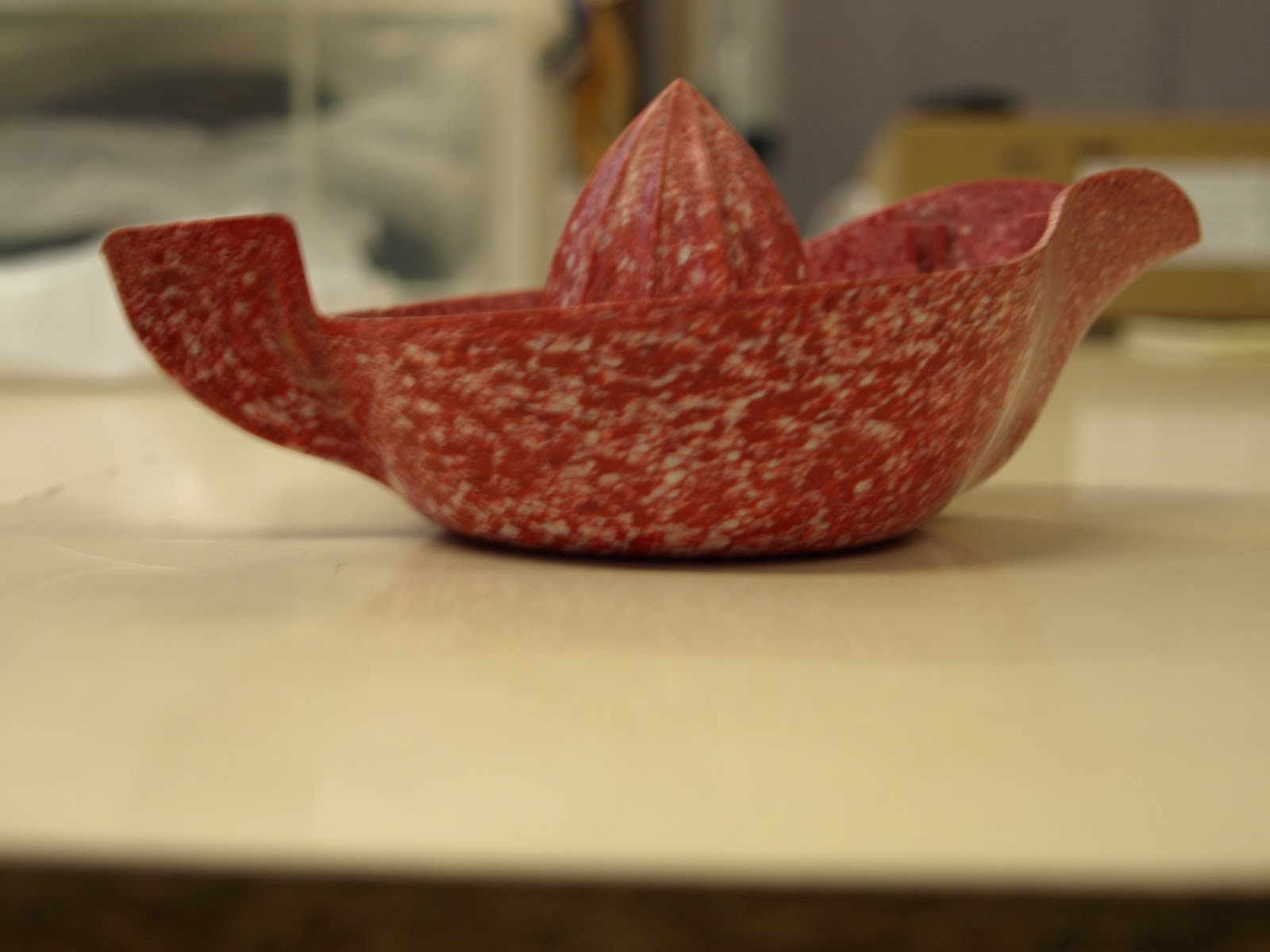
Today I went to see the Betty Smithers Design Collection; I found it to be a very useful experience, mainly because it made me realise that no one object could define this collection and that gave me a lot more confidence in the designs I had done, particularly the juice lady. I also got to photograph the original juicer I had used for my designs and was able to create a better image from them.
The Betty Smithers Design Collection: Celebrating Design Through The Ages
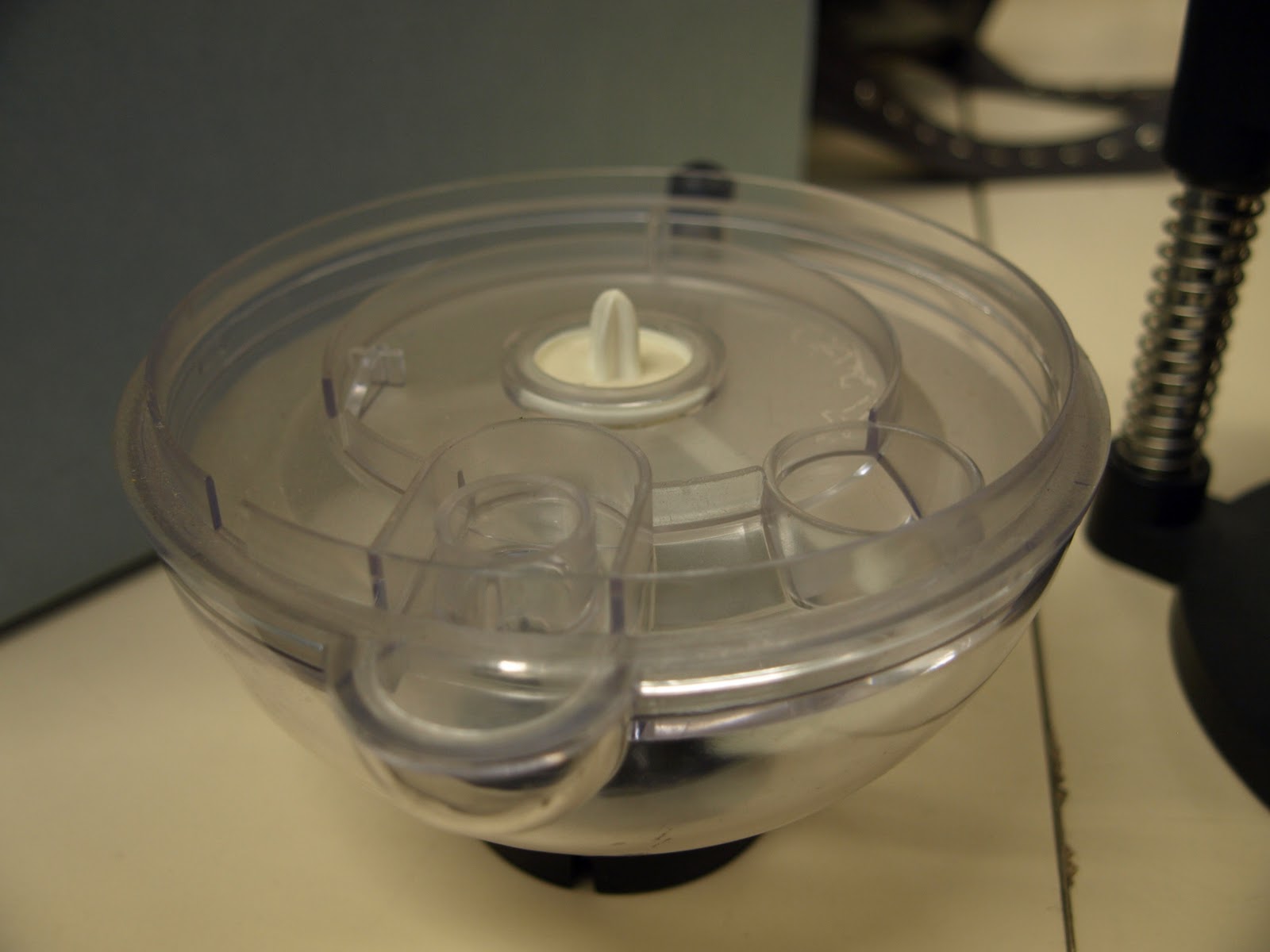
I also found a very interesting looking coffee maker/ mixer (I'm not sure what it is exactly), to me it looked like a robot which I found interesting as this was an old design and I tried to incorporate this idea into the mascot design I made from it.
The Betty Smithers Design Collection: Looking To The Past To Design The Future
I really like the juicer lady design that I have done as I feel it is bold and simple which would suit as a logo that can be put on merchandise. In terms of anthropomorphism, I like that the object itself has been turned into an extension (dress) of its function (juicer lady) and hasn't simply had eyes added to it as is the case with many anthropomorphic objects.
As a crossover between our drawing module and our research module we have been asked to apply our knowledge of anthropomorphic characters to draw our own anthropomorphic character.
We have been given the task of creating an anthropomorphic mascot for the Betty Smithers Design Collection using one of the objects from the collection as inspiration.
Here, I have used a juicer as the base for my character designs, I quite like my ideas but I'm not sure how well they represent the whole collection.
This week, we have been asked to post up the draft introduction to our essay in order to identify our strengths and weaknesses when writing formal language.
My Essay Question:
Explore the ways in which the character of Rango embodies the classic Western hero.
(Draft) Introduction:
'Rango' is a critically acclaimed computer animated Western Comedy that follows the journey of a lost pet chameleon who, through his colourful but untrue stories, finds himself appointed Sheriff of the troubled desert town of 'Dirt'; the film shows the trials of this anthropomorphic chameleon on his way to becoming a hero.
Possibly the biggest reason for this film's success is the way that it encapsulates the Western genre, from the character designs that caricature classic Western stereotypes, to the creative references of Western classics that the film drew inspiration from. Rango himself has been constructed from an array of personalities including Hunter S. Thompson and Clint Eastwood.
Through this essay, I aim to explore the ways in which the character of Rango embodies the classic Western hero by breaking the character down and analysing him against the figures he was inspired by; I will also be looking at the anthropomorphic traits of Rango that lend to the more symbolic aspects of the character with regard to representing the Western hero.
This week, we have been asked to write about 1 interesting thing we have done during the week that relates to animation or VFX.
I have decided to review the film 'Season of the Witch' for this post as I saw this film for the very first time during the week.
Overall, the film was flat; the plot was boring and nonsensical at times, the dialogue felt extremely manufactured, and there was no character development at all.
The thing that interested me though was the use of makeup vs VFX within the film.
The VFX was weak and made this film look cheap, and even though the film only had a budget of $40million I felt that the VFX could've been utilised much better than it had been; the fantasy landscapes had been inserted fairly well for example, but it was the creature design that ultimately let the film down- the creatures did not blend well with the live action scenery or the actors that had to interact with them.
However, the physical makeup within the film was extremely well done, to the point where I had to look away at times. A part of the story is the spreading of the Plague or Black Death, thought to be the work of a witch, and so there were a lot of rotting bodies and infected characters. I thought that these makeup effects added a lot of atmosphere to the film and I actually felt more of a threat when the main characters were around Plague victims rather than the supernatural creatures!
I think that this film is a good example of why we shouldn't become too reliant on VFX, it is so readily available that anyone can use it, filmmakers have become lazy in their use of it and audiences have grown so used to it that VFX can no longer carry a film like it used to; in fact, below par VFX can now hurt a film.
Instead, I think that physical effects, such as the ones used in this film, should be used more than they are as they are much more organic than CGI and they connect the audience on a much deeper level.
Following our group presentations, we have been asked to use this weeks blog task to reflect on what we've learnt from the presentations of our peers in regards to presentation skills through the following questions:
1) What is one thing you should not do during a presentation?
Do not hide behind your notes, learn your material so that you can use your notes (or better yet key note cards) to aid the flow of your presentation. I noticed quite a few people talking into the sheet of paper in front of them which made it hard to connect to the speaker, also it seemed that people were scared to diverge from their notes so much so that they would back track just to say the sentence exactly as it was written.
2)What is one thing you should do during a presentation?
Engage your audience be it through questions or even a game, this keeps the audience interested in the subject of your presentation and keeps them alert throughout. I thought that the Advertising group did particularly well with this aspect of presenting- they had made large cardboard cutouts of animals along with their mascot counterparts (eg. a tiger, followed by Tony the tiger) and played a game with the audience whereby they had to guess the mascot based on the realistic animal.
We were also asked to note one interesting thing about anthropomorphism that we had learned from one of the presentations given on Wednesday:
One interesting thing I had learned came from the Advertising group; they had found that anthropomorphic characters are often used as mascots for things such as cereal because children cannot differentiate them from the superheroes of the TV shows they were watching on that same channel.
Since there hasn't been a task assigned to us this week, I decided I would share the thoughts I have had whilst preparing for my group presentation; a lot of it won't be used in the presentation but I thought it'd be better to note it here than just let it pass.
I have been assigned the topic of 'technology' within the presentation, and so I have looked at the technology and techniques involved in 3D feature films that help to transfer the humanlike traits of the actors to their anthropomorphised characters and discuss how this technology could affect animation in the future.
Recording/ Referencing- This is a fairly traditional way of capturing the performances of actors and it is still used despite the advances in technology. An example of this is the film 'Shark Tale', these characters have been designed as caricatures of the actors playing them and the animators used footage of the actors as they recorded their lines to reference and recreate the particular expressions and gestures they performed as they acted.
Emotion Capture- The film 'Rango' introduced this technique, the actors perform the scenes together and in costume whilst they are being filmed and (voice) recorded; the animators then reference the footage as they create the animations from scratch. This method spawned from a collaborative effort between people from live action film backgrounds and people from animated film backgrounds, as directors of live action are beginning to cross over into the animation realm they are bringing these new techniques and mind sets to the medium.
Performance Capture- Avatar, though not strictly a 3D feature film, has affected the way in which performances are captured forever. The cameras mounted on helmets are able to record every minute motion within the face and transfer them onto the CG character for a much more in depth performance compared to the frame-by-frame expressions created by animators. Along with this are the cameras that are able to display the 3D world on a monitor so that the director can see the actors 'on set' and direct the scene as if it were a live action scene.
Rise of the Planet of the Apes has taken this a step further by having these performance capture cameras on set (rather than in a warehouse), this allows the actors to play off the surroundings to create an even better performance.
The problems with performance capture however are the boundaries between actors and animators that are slowly being blurred, both party's feel that they may someday become obsolete.
And secondly, the more realistic the character becomes, the greater the chance of falling into the 'Uncanny Valley' which is where a character looks and moves extremely realistically but there is something slightly 'off' about them, this is because the brain no longer perceives the film as animation, but as reality with something wrong about it; this creates an extremely negative reaction from audiences - even the team on Avatar had to work tirelessly to try and avoid this.
TinTin is a perfect example of the Uncanny Valley, the improved performance capture technology and realistic CG mixed with the simplistic and caricatured style has created errily lifelike characters with an appearance that is both human and not human, this has created somewhat of a backlash from audiences.
Overall, animating anthropomorphised characters in a humanlike way can create an effective piece but designing them to be them too humanlike may lead to negative results.
Basically put, a more successful anthropomorphic character is one that captures the realistic human movements of their actors rather than their physical likeness.
As the animation world continues to open up to live action film makers thanks to technology, it will one day be merely a choice between traditionally made animation (whereby the Emotion Capture route would be taken and animators would be the more prominent workforce), or modern/ performance animation (whereby the Performance Capture route would be taken and actors would be the more prominent workforce).
Someday the opportunity to make 3D animated features will be available to everyone through motion capture, and the traditional frame-by-frame animation will become something of an elitist skill- much like the traditional 2D features that are now dying out because of CG animation.
This week we were asked to find 3 keywords to help us with our research in the library, here are mine:
Symbolism
(Character)Design
Personality
These are the main things I hope to cover in my essay. I think a good way to gather research on my chosen subject would be to watch some classic Westerns, specifically the Clint Eastwood films as his character played a big part in Rango's own interpretation of a Western hero.
This week's assignment was to, first, write a post about our presentation group.
My group are studying 3D Feature Films for our presentation.
The group consists of Megan (me), Emma, Richard, Rachel, Jack, Jamie, and James; I am the only VFX student in my group, and the others are all from animation so I don't know their details such as Surnames or their blogs yet but I shall update this post with that information when I get it.
We have named ourselves MERGE; this came about by putting all of our initials together as we brainstormed a name, though it actually spelt MERRJJJ we thought it best to go with the traditional spelling!
We do not yet know for sure what our presentation question will be, but as it stands we seem to be heading in the direction of how 3D technology can capture the performance, expressions, and likeness of the film's actors.
We have set up a group blog so that we can share any research and discuss ideas:
The second task for this week's assignment was to brainstorm my essay character and post up my chosen essay question; even though I am not entirely sure about my wording, I am sure of the direction in which I want to go with my essay.
This week, our assignment was to choose one anthropomorphic character who would then become the focus of our essay. For me, this was an easy choice...
Rango is my chosen character, not only because 'Rango' is a masterful film, but because the character of Rango is a very deep character in terms of anthropomorphism and symbolism and one that I feel I could write confidently about.
Though they are a bit choppy, here are my initial notes on the character:
Rango is a pet chameleon who is going mad with loneliness, his only ‘friends’ are his very own anthropomorphised objects- a plastic palm tree, a headless, one-armed barbie torso, a plastic wind up fish, and a dead bug. Using his ‘friends’ as fellow cast members, Rango creates countless stories, always casting himself as the hero.
Rango’s acting has stemmed from his longing to be something more than he is now, and the props act as a way to reflect upon his own feelings and voice his insecurities; this is shown by the plastic tree, named Victor, who ‘tells’ Rango that his character is undefined, to which Rango replies ‘That's absurd! I know who I am. I'm theeee....I'm the guy! The protagonist, the hero! Every story needs a hero! I mean, who else is better qualified to bask in the adulation of his numerous companions!?’
In design terms, Rango’s character is displayed through his species. Chameleons blend which is symbolic of Rango’s non existent sense of identity; he is an actor and can play someone else easily, but when it comes to his own true self he is lost.
Even though Rango is very realistic in design, Rango’s general body shape somewhat resembles a man with a beer gut; he walks on two legs and his body shape is more humanlike in that he has arms and legs with defined hands and feet as opposed to the more pincer like appearance of a real chameleon. Being a chameleon with eyes that can pivot all the way around also allows for Rango’s nervous and deceitful nature to be seen through his constantly shifting eyes.
Rango’s realistic chameleon appearance adds a lot of character but it creates a lot of restrictions on his facial features; his eyes are very beady which makes it more difficult for him to emote through what is considered to be the anchor of human expression, and his eyebrows are represented by the ridges running along his face, these ridges are facial ornamentation (something that is common with chameleons) and only slightly raise or lower to accommodate expressions throughout the film. It is Rango’s wide mouth that allows him to be so expressive, his mouth runs along the width of his head and his lips are purely made up of a thin yellow pigmentation along the mouth line so as not to distract from the mouth’s simple yet extreme forms.
All of Rango’s facial expressions were modelled after his actor Johnny Depp, Depp and the rest of the cast acted out their parts in a studio with a camera crew recording their actions and facial expressions for direct reference.
In the world of ‘Rango’, all of the animals are clothed in some way, in the beginning of the film Rango is wearing a simple Hawaiian shirt- partly as a reference to the film ‘Fear and Loathing in Las Vegas’ and more specifically the character of Hunter S Thompson, who Rango was partially based on- but within the context of the film it could be assumed that his owners dressed him or gave him the shirt. When he gets to the town of ‘Dirt’ and is promoted to Sheriff, Rango sports a variety of traditional western outfits, and later on he wears a similar outfit to Clint Eastwood as ‘the man with no name’ which is symbolic of Rango’s realisation in becoming a hero.
The aim of this week's assignment was for us to find three blogs that we particularly enjoy and post them up; of the many blogs I've been fortunate to stumble upon over the years, I have decided to feature these three:
First is Lines and Colours, I hold this blog in high regard for it's sheer wealth of information and inspiration; the blog doesn't focus on any one aspect of art, but holds it's doors open for everything from cut-book sculptures to traditional portrait paintings. The blog is also fantastic for highlighting the technological advances in how we view art.
My favourite aspect of the blog is the articles that feature both up and coming artists who are still unknown to the masses, and artists whose work and presence has faded with time- I have lost count of how many artists I have discovered through this blog.
Second is Character Design, a fairly self explanatory name. Character design has always been my passion, the human body is such a wonderful thing and to see the vast interpretations of it's form by the artists featured in this blog always pushes my desire to evolve and refine my own style.
Third is Animation Backgrounds, a blog that is unfortunately no longer updating but the content that it already holds is simply beautiful; the purpose of this blog is to put the spotlight on the rich and detailed backgrounds of animated films and TV shows that the viewer would never pay attention to otherwise.
As I said previously, I am passionate about character design and as a result I tend to favour characters and the human form when doing art, but as a concept designer I need to be skilled in all areas so I am actively looking for resources like this to help me hone my skills. I have only recently found a flare for background/ landscape design, but looking through the work shown on this blog makes me want to delve deeper into the subject.
These blogs are not only great for finding inspiration, but they are also extremely helpful research spots so I would definitely recommend them.